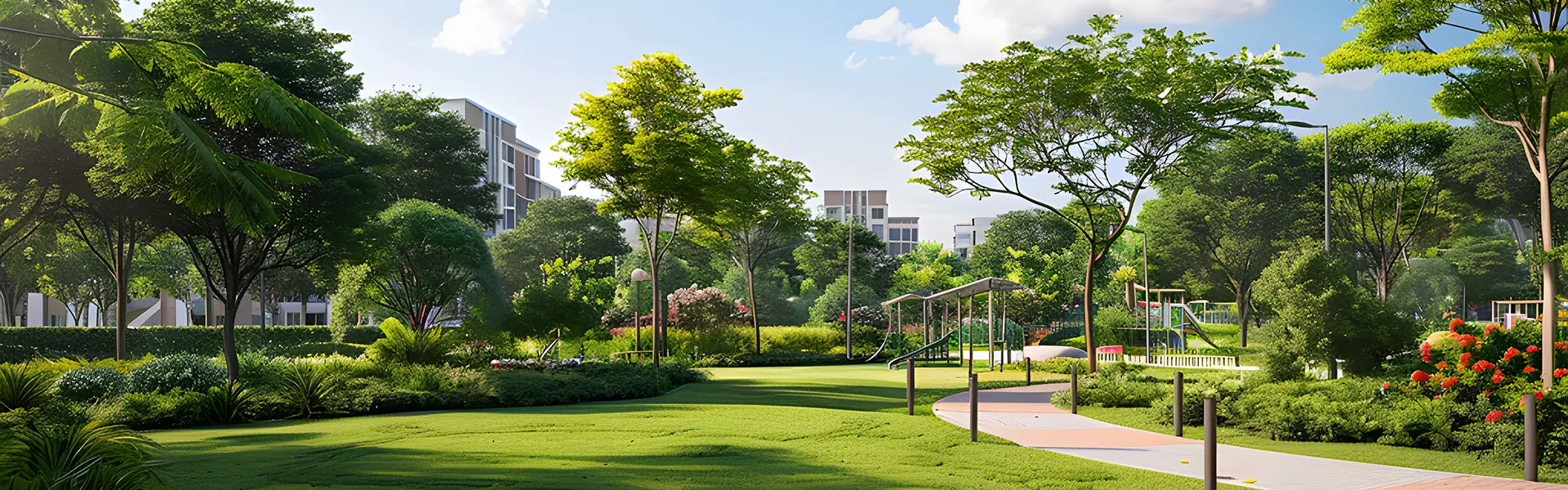
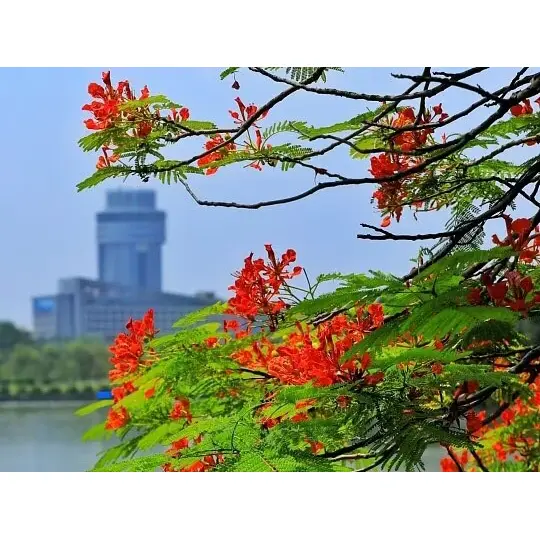
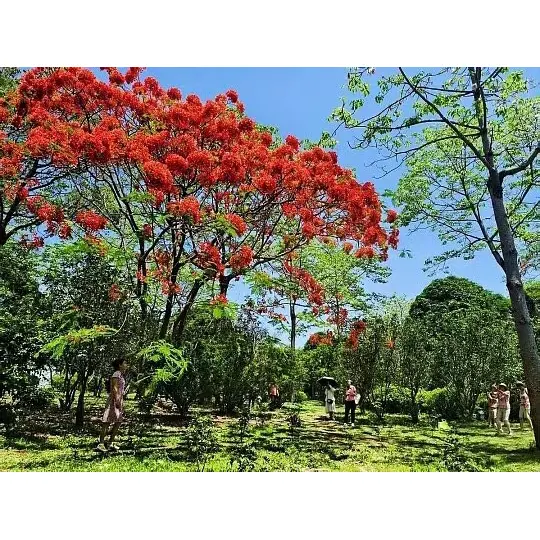
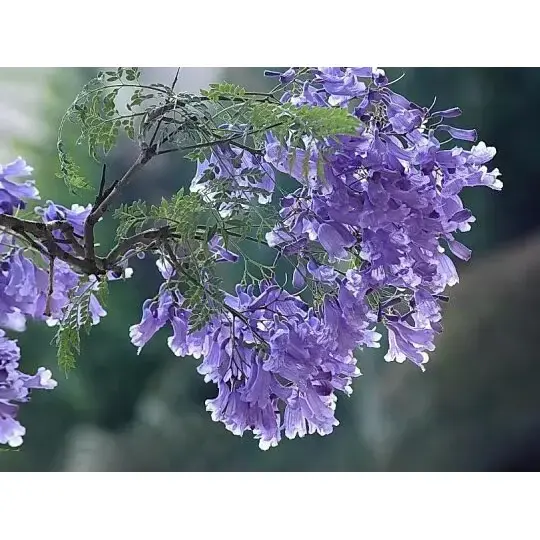
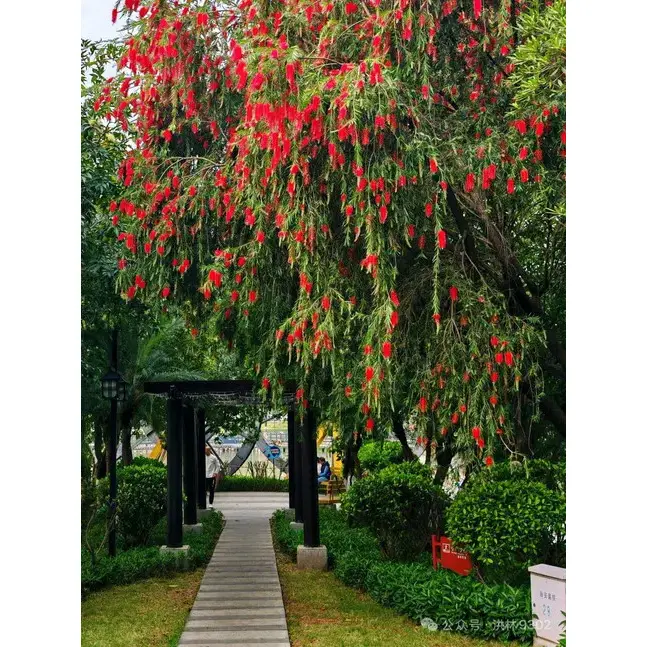
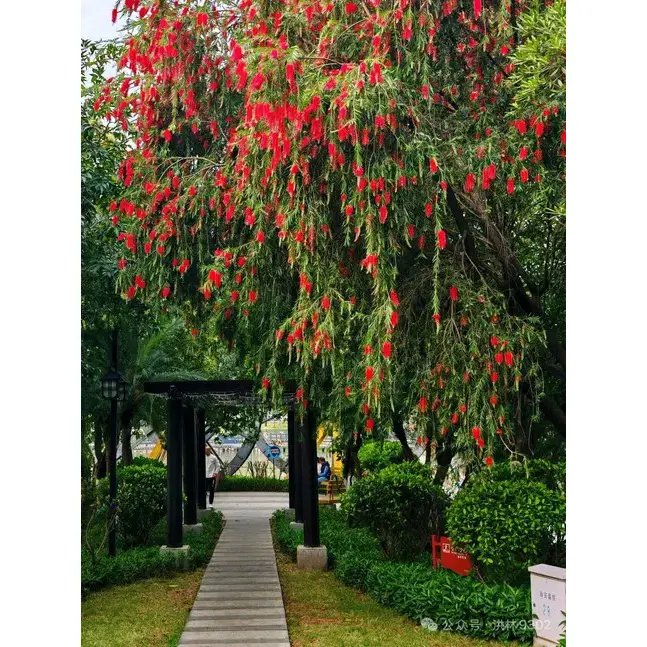
In China, Rogours has been cultivating Weeping Bottlebrush for 30 years and owns its own 1,000-acre nursery, located in Zhangzhou. It offers a wide range of products including healthy and viable seedlings, exquisite potted plants, and mature landscape trees. The company has strong international trade capabilities, is familiar with the European market, and precisely understands sustainable development requirements such as EU regulations, CE certification, BSCI, and retail standards. We provide you with one-stop high-quality tree seed supply service from source cultivation to compliance export.
The maintenance cost of Weeping Bottlebrush is low. It requires full sunlight and is not tolerant of shade. Its growth temperature ranges from 15°C to 35°C. It is cold and heat-resistant, able to withstand extreme temperatures of -7°C to 40°C and tolerate frost. It prefers fertile and moist acidic soil, but can also thrive in poor, dry sandy, loamy, and clay soils. Its natural drooping branches effectively disperse wind, and it has strong wind resistance.
Landscape Application and Design Suggestions
1. Weeping Bottlebrush has great growth potential. It can be maintained as a dense hedge by regular pruning.
2. It has a long flowering period, which can provide an excellent habitat and food for pollinating insects. The scent emitted by the leaves has an insect-repellent effect.
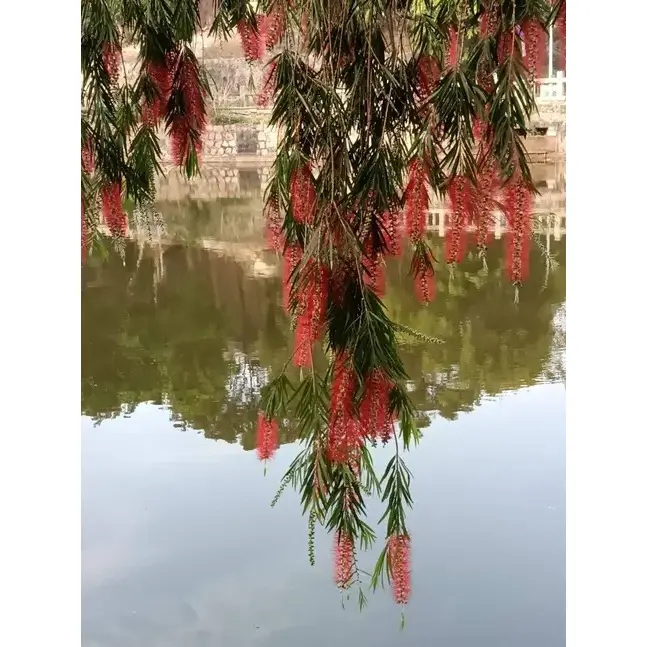
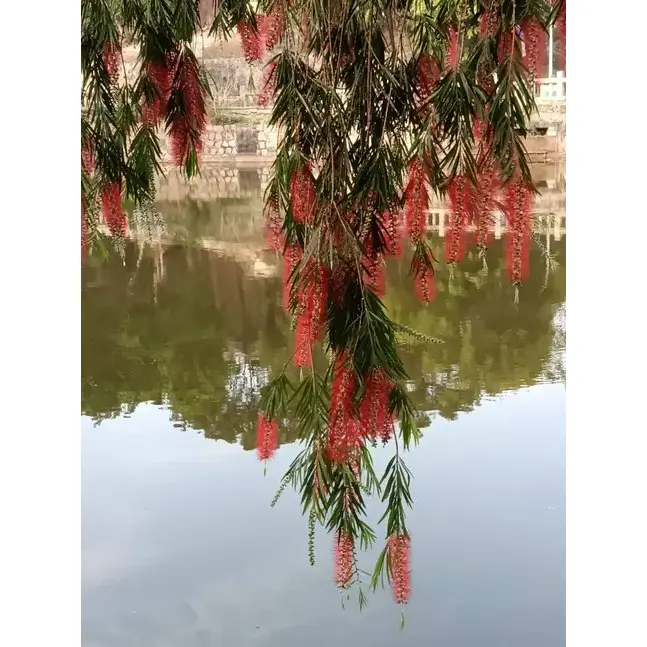
3. It is often planted along water features or pool edges. The drooping branches and red flowers will form reflections in the water, creating an excellent visual effect.
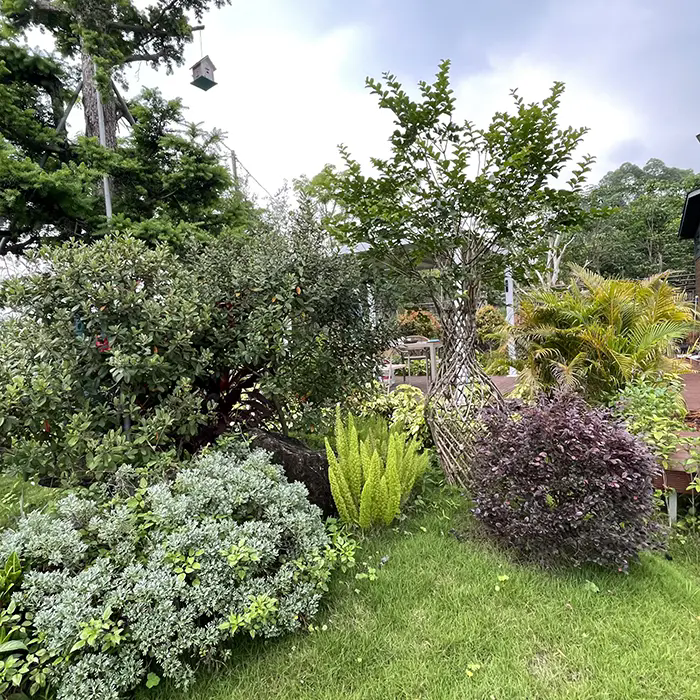
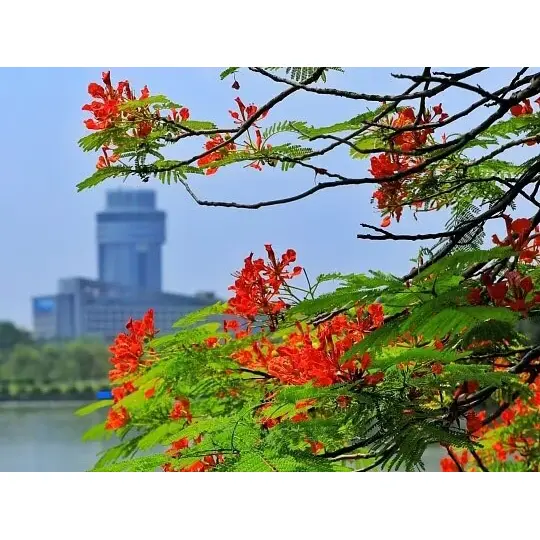
4. When combined with Blue Hibiscus and Small-leaved Prumosa, it can create a multi-species landscape with rich layers and harmonious colors, presenting a beautiful scene throughout the year.
Trimming methods for different situations:
|
Pruning Type
|
Purpose and Operation
|
Key Points
|
|
Post-flower pruning
|
Remove the withered flower clusters along with the lower 2-3 pairs of leaves to stimulate new growth.
|
This is the key pruning to ensure the amount of flowers in the next blooming.
|
|
Pruning the inner part
|
Remove all dense branches, crossing branches, parallel branches, dead branches, and diseased or pest-infested branches from the base completely.
|
Improve ventilation and light penetration, keep the interior of the tree shape clean and tidy.
|
|
Shortening control form
|
Trim the overly long branches that disrupt the overall plant shape. Leave the outer buds below the cut surface to encourage the branches to grow outward.
|
The cut should be smooth, with a 45° slanted edge, to prevent waterlogging and rotting.
|
|
Pruning the top to control height
|
If you don’t want the plant to grow too tall, prune the top (remove the tips) of the main stem or main branches to inhibit the top growth advantage and encourage the growth of lateral branches.
|
After pruning, multiple new branches will sprout below the cut, making the plant shape more full.
|
|
Re-cutting and renewal pruning
|
For plants that have aged, flower production has decreased, or their plant shape is disordered, re-cutting (back-cutting) can be performed. Retain the main branch framework and prune off most lateral branches, or leave only a few basal buds.
|
After re-cutting, it is necessary to strengthen water and fertilizer management to promote the emergence of strong new branches and restore vitality.
|