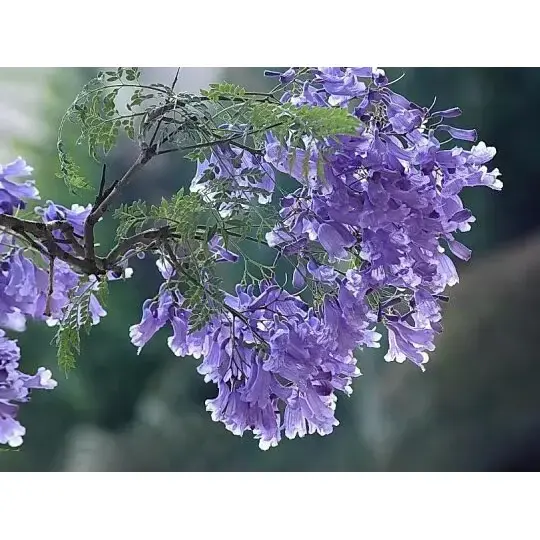
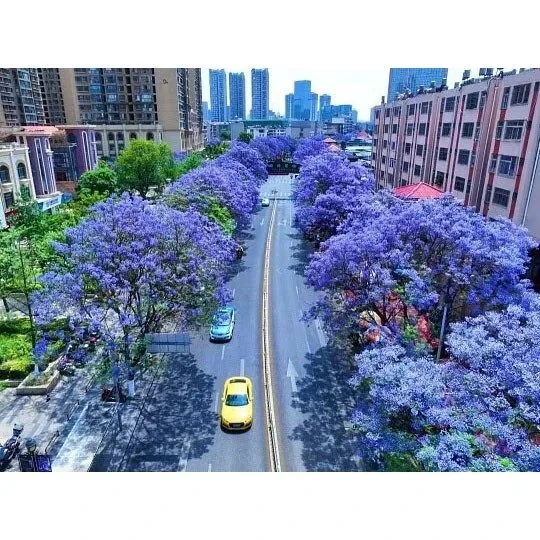
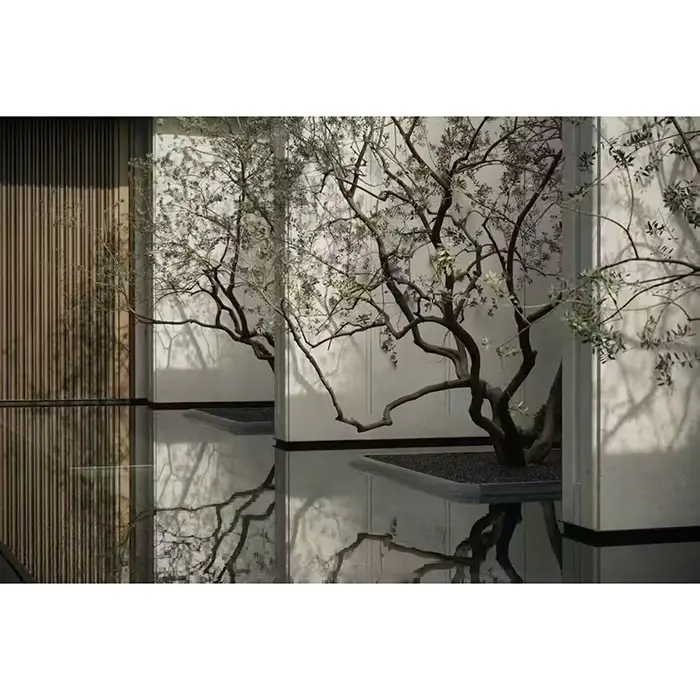
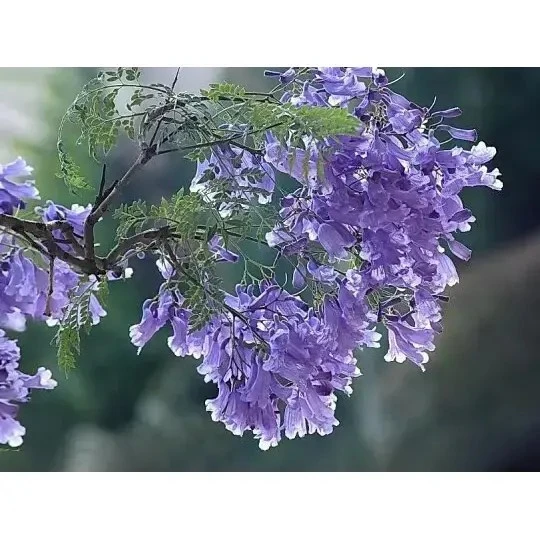
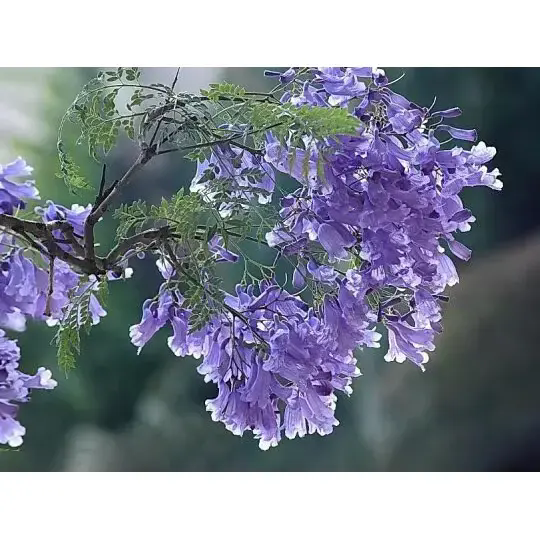
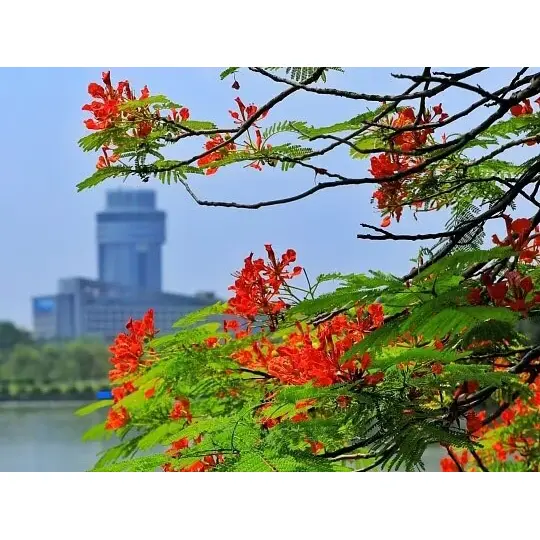
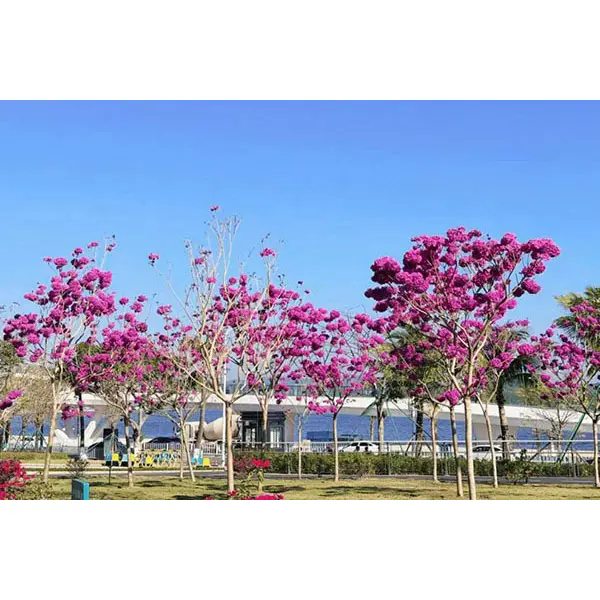
The Jacaranda Tree is a semi-deciduous tree. You can purchase bulk young seedlings, potted plants, and landscape elements with "in Stock" availability from Rogours. The mature tree can reach a height of 20 meters, with a crown diameter of 10–15 meters. The bark is thin and grayish-brown. During the seedling stage, it is smooth, but after maturity, it becomes small-scale scales, up to 45 centimeters in length, with a light and airy texture, resembling ferns. During the flowering period, the tube-shaped flowers form a conical inflorescence about 30 centimeters long, with each flower having a diameter of approximately 5 centimeters. After flowering, it produces a woody capsule with a diameter of 5–8 centimeters, containing a large number of flat-winged seeds.
Rogours is a supplier with a long-term growth habit and possesses professional planting techniques, ensuring that customers can obtain healthy Jacaranda Trees at the most favorable price. The growth temperature for Jacaranda Trees is 20°C to 30°C, and it must not be lower than -2°C. They require sufficient sunlight, with at least 6 to 8 hours of direct sunlight per day. They prefer sandy soil or loam soil with good drainage and rich organic matter. They can tolerate slightly alkaline soil with a pH value ranging from 6.0 to 7.5. During the planting period, appropriate watering is required. After the plants mature, they have a certain degree of drought tolerance and can adapt to moderate humid environments and moist semi-arid climates. They can tolerate moderate wind force, but young seedlings should avoid strong wind attacks.
The Jacaranda Tree has achieved successful implementations in parks and roads of cities such as the United Arab Emirates, Saudi Arabia, Oman, Dubai, Abu Dhabi, and Doha. It is highly adaptable. Under sufficient irrigation conditions, it can withstand summer temperatures above 40°C. After being planted for 2-3 years, it develops good drought resistance. Deep watering 2-3 times per week enables it to have moderate salt tolerance. It can be used in coastal area gardens and has achieved widespread and excellent success cases in parks and roads of cities like Dubai, Abu Dhabi, and Doha.
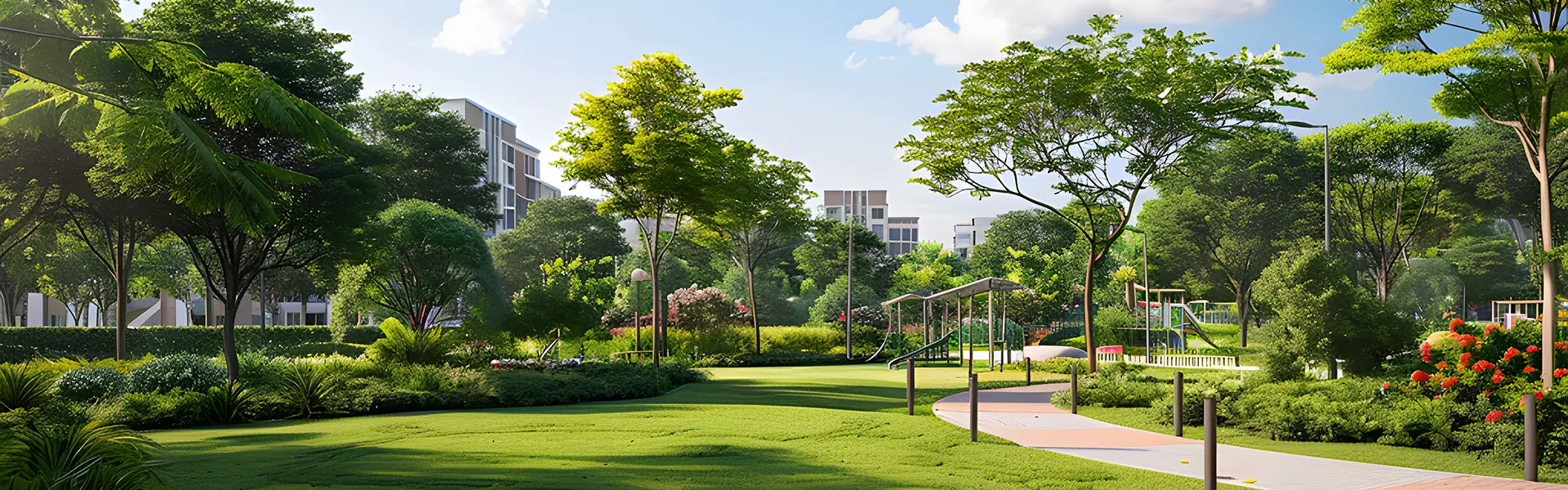
As one of the most highly regarded ornamental trees in the Middle East, the Jacaranda Tree plays a crucial role in landscaping, providing the best shade for parks and public green spaces, enhancing the aesthetic appeal and property value of residential areas, adding an exotic tropical touch, improving air quality, and alleviating the urban heat island effect, thus achieving ecological benefits such as these. To achieve the best visual effect, it is recommended in the design that the Jacaranda trees be planted in groups of 5 to 10 along the roadsides or in open areas as focal points.