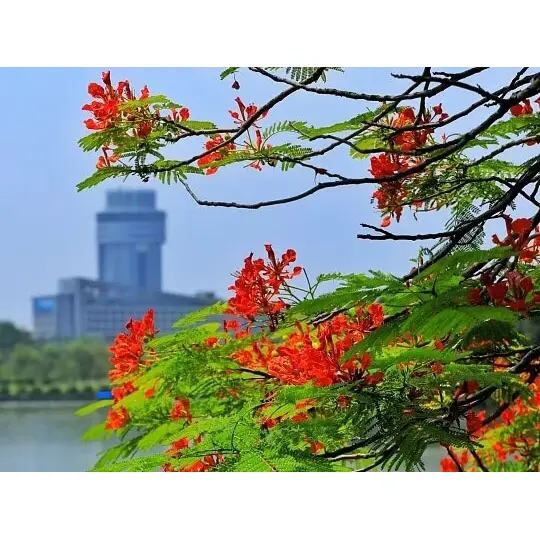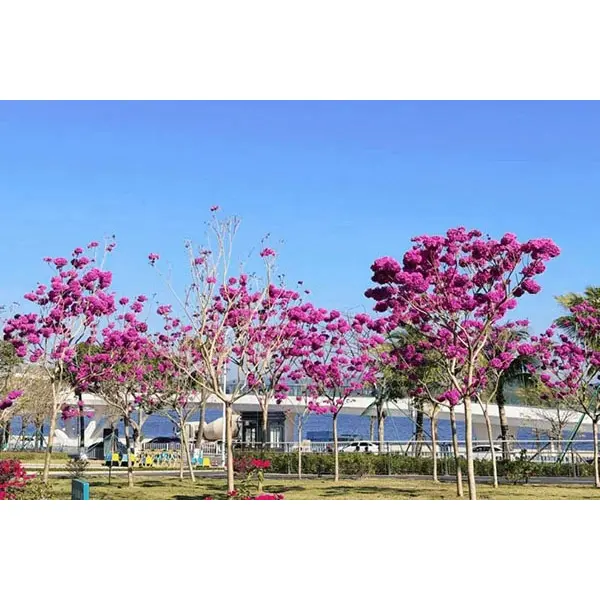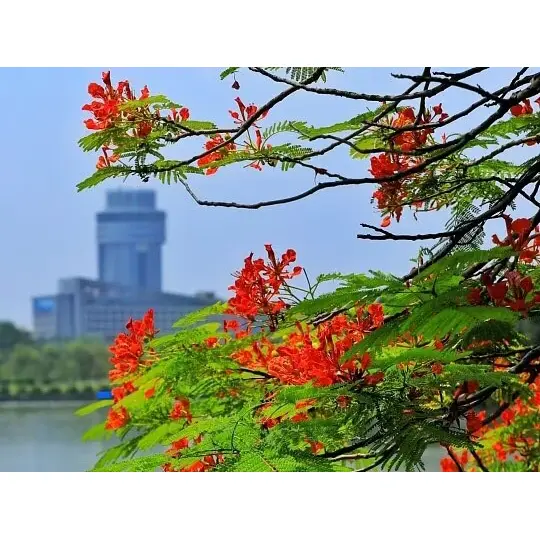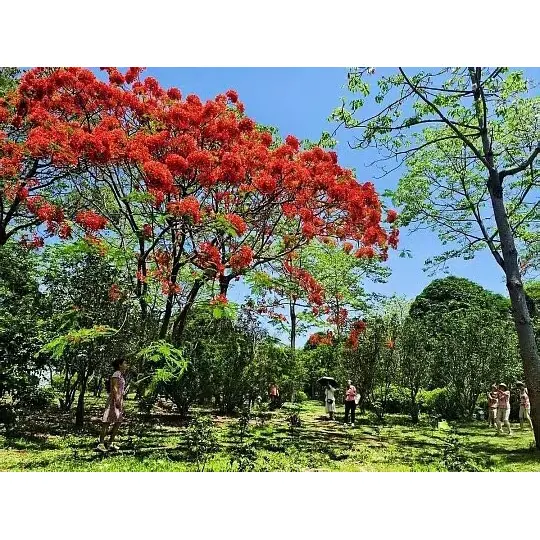

Royal Poinciana Liners provide an effective starting point for growing one of the world's most striking tropical flowering trees. Known botanically as Delonix regia, royal poinciana is admired for its delicate, fern-like foliage, spreading crown, and brilliant orange-red blossoms. Successful cultivation begins long before the first flowers appear. Healthy root development, carefully managed irrigation, suitable growing media, wind protection, and gradual exposure to sunlight all influence how young trees establish. For commercial nurseries and landscape developers, understanding these early growth requirements is essential for producing vigorous trees that can adapt successfully to their permanent planting environments.
Abstract
Royal poinciana is a tropical ornamental tree native to Madagascar and valued for its broad canopy, fine-textured foliage, and dramatic seasonal flowers. During its earliest stages, the species requires different care from established landscape trees. Container-grown young plants must receive sufficient light, well-drained growing media, consistent moisture, and protection from frost and excessive mechanical stress. This comprehensive guide explains the tree's botanical characteristics, nursery growth stages, root development, transplanting methods, irrigation, fertilization, pruning, environmental adaptation, and landscape applications. It also examines common cultivation problems, nursery quality inspection, preparation for transportation, and ongoing establishment care. Practical tables and expandable questions help nursery professionals, landscape contractors, and horticultural project managers develop reliable planting and maintenance practices.
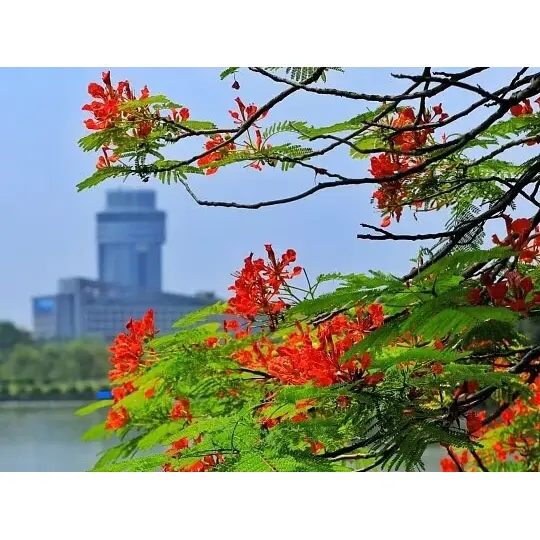
Table of Contents
Click any numbered topic to jump directly to its corresponding section.
- What Makes Royal Poinciana a Distinctive Tropical Tree?
- Why Is the Nursery Liner Stage Important?
- How Does Container Cultivation Support Healthy Roots?
- Which Growing Conditions Produce Vigorous Young Trees?
- How Should Irrigation and Drainage Be Managed?
- What Is the Best Way to Transplant Young Trees?
- How Do Nutrition and Soil Management Affect Growth?
- When Should Pruning and Structural Training Begin?
- Where Can Royal Poinciana Enhance Landscape Design?
- How Can Young Trees Adapt to Different Climates?
- Which Cultivation Problems Should Growers Watch For?
- How Does Professional Nursery Management Support Quality?
- How Should Landscape Projects Select Nursery Plants?
- Frequently Asked Questions
- Final Tropical Tree Establishment Recommendations
1. What Makes Royal Poinciana a Distinctive Tropical Tree?
Royal poinciana, Delonix regia, belongs to the Fabaceae family and originates from Madagascar. It is widely cultivated in warm regions for its highly ornamental appearance and dramatic flowering habit.
Mature trees develop a broad, often umbrella-shaped crown with finely divided, bipinnate leaves. Their flowers generally display vibrant red or orange-red petals, creating a striking seasonal canopy.
1.1. Leaf Characteristics
The foliage consists of numerous small leaflets arranged along branching leaf structures. This creates a light, feathery appearance that contrasts with the tree's substantial mature crown.
Newly emerged leaves are often tender and lighter in color. Their appearance becomes more characteristic as the plant develops additional foliage.
1.2. Flowering and Seasonal Changes
Mature trees flower most impressively under suitable sunlight and seasonal conditions. Flowering behavior varies with climate, maturity, irrigation, and local weather patterns.
In some environments, royal poinciana may shed part or much of its foliage during cooler or drier periods. Seasonal leaf loss does not always indicate poor plant health.
1.3. Mature Tree Form
The species can develop an extensive canopy and spreading root system. These characteristics make it attractive in parks and large landscapes, but they also require careful site planning.
Mature trees should have adequate clearance from buildings, walls, sidewalks, underground utilities, and other structures that may be affected by root or canopy growth.
Botanical identification: Royal poinciana is Delonix regia, a member of the Fabaceae family. It should not be confused with unrelated palms or other trees that share similar common names.
2. Why Is the Nursery Liner Stage Important?
A nursery liner is a young plant grown for further cultivation, potting, or eventual installation. It represents an early stage in the production of a finished ornamental tree.
During this stage, root development, shoot growth, and structural stability are still being established. Young plants need careful management because they are less tolerant of environmental stress than mature trees.
2.1. Young Stem Development
Emerging stems are relatively flexible and may not yet possess sufficient woody strength to tolerate strong wind. Uncontrolled movement can damage tender tissue or interfere with upright growth.
Protection from strong wind and suitable spacing between plants help support healthy development.
2.2. Early Leaf Growth
New foliage is particularly sensitive to abrupt environmental changes. Sudden exposure to intense sunlight after shaded nursery conditions may produce leaf scorch.
Gradual hardening allows leaves and stems to adapt to brighter conditions as the plant grows.
2.3. Establishing a Reliable Root System
Roots provide water uptake, nutrient absorption, and physical stability. A healthy liner should have an appropriately developed root system without severe circling, decay, or confinement.
Root condition is especially important because transplanting places temporary demands on water uptake and plant recovery.
- Healthy foliage: Leaves should show growth appropriate for the cultivar and growing conditions.
- Stable stems: Young shoots should be free from major injury and excessive bending.
- Suitable roots: Root systems should be intact, active, and appropriately distributed.
- Clean containers: Containers should permit drainage and support organized handling.
- Consistent development: Plants intended for the same project should have compatible growth stages.
3. How Does Container Cultivation Support Healthy Roots?
Container cultivation helps retain growing media around a young plant's roots during handling and transplanting. It also allows irrigation, drainage, and nutrition to be managed more consistently under nursery conditions.
Our Royal Poinciana Liners are offered as container-grown young trees with intact root systems. We place particular emphasis on preserving root-ball integrity and supporting successful establishment after planting.
3.1. Benefits of Container-Grown Plants
Retaining the growing medium around the roots reduces disturbance during movement from the nursery to the planting site.
A properly managed container also provides a defined root environment, making it easier to monitor moisture and drainage.
3.2. Avoiding Restricted Root Growth
Plants kept too long in undersized containers may develop circling or congested roots. Severe root deformation can compromise long-term establishment.
Timely container changes and root inspections help support a more balanced root structure.
3.3. Container Drainage
Drainage openings must remain functional. Waterlogged media can limit oxygen availability and encourage root diseases.
Proper drainage is particularly important in tropical climates where heavy rainfall can occur during the growing season.
3.4. Root-Ball Handling
During transplanting, the root ball should be protected from unnecessary shaking, compression, or drying. Remove the nursery pot carefully rather than pulling aggressively on the stem.
Severely circling roots may require correction according to appropriate horticultural practice. The goal is to preserve healthy roots without leaving potentially damaging root defects.
4. Which Growing Conditions Produce Vigorous Young Trees?
Royal poinciana is adapted to tropical and warm subtropical environments. Temperature, sunlight, soil structure, and drainage affect its early development.
4.1. Temperature Requirements
Active growth is favored by warm temperatures. The nursery product guidance identifies approximately 20–35°C as a favorable growing range.
Young trees are vulnerable to cold conditions and should be protected from frost. Extended exposure to temperatures outside their tolerated range can damage leaves and stems.
4.2. Sunlight
Established royal poinciana trees generally perform best in full sun. Young container plants may benefit from temporary protection against abrupt exposure to extremely intense sunlight.
As the plant becomes stronger, gradually increase light exposure so that it can adapt to the intended landscape environment.
4.3. Suitable Soil
Well-drained sandy or loamy soil supports healthy growth. Soil structure should allow sufficient oxygen around the roots while retaining enough moisture for establishment.
Heavy, compacted soil may require improved drainage or a different planting location.
| Growing Factor | Preferred Condition | Management Consideration |
|---|---|---|
| Climate | Tropical to warm subtropical | Protect young plants against frost |
| Temperature | Warm growing conditions, approximately 20–35°C | Avoid cold stress and excessive nursery heat |
| Sunlight | Full sun after suitable acclimatization | Harden young foliage gradually |
| Soil | Well-drained sandy or loamy structure | Prevent compaction and standing water |
| Moisture | Consistent during establishment | Avoid both drought stress and saturation |
| Wind exposure | Sheltered during early growth | Protect flexible stems from damage |
These conditions are general horticultural guidance. Local climate, plant size, container design, and soil characteristics should determine the final management plan.
5. How Should Irrigation and Drainage Be Managed?
Water management is one of the most important factors in nursery production. Young trees have less extensive root systems than established specimens and can experience moisture stress relatively quickly.
5.1. Avoiding Excessive Drying
A growing medium that dries too severely can damage fine roots and cause leaf wilting. Newly transplanted trees are especially vulnerable while their roots are adjusting to the surrounding soil.
Monitor moisture near the root zone rather than relying only on the appearance of the soil surface.
5.2. Preventing Waterlogging
Saturated growing media restrict oxygen movement around roots. Prolonged saturation can encourage decline and root disease.
Irrigation should allow appropriate moisture levels while giving excess water a clear drainage path.
5.3. Seasonal Irrigation Changes
Water requirements vary with temperature, humidity, wind, rainfall, and plant size. Hot, dry conditions may require more frequent inspection, while cooler or rainy periods may require less irrigation.
5.4. Checking Root-Zone Moisture
Inspect the growing medium at a useful depth before watering. Container weight, moisture sensors, and direct inspection can help identify whether irrigation is required.
Nursery principle: Young trees need adequate moisture and oxygen at the same time. A consistent moisture-management routine is more useful than following a fixed watering interval regardless of the weather.
6. What Is the Best Way to Transplant Young Trees?
Transplanting changes the physical environment around the root system. Successful establishment depends on suitable soil, correct planting depth, root protection, and consistent aftercare.
Our Royal Poinciana Liners are cultivated for continued nursery growth or landscape planting. We recommend maintaining root-ball integrity during handling and avoiding unnecessary transplant stress.
6.1. Preparing the Planting Location
Select a site with adequate sun exposure, good drainage, and sufficient room for mature root and canopy development.
Before digging, check for underground utilities, nearby foundations, and landscape features that may conflict with future growth.
6.2. Planting Depth
The root flare should remain at or slightly above the surrounding soil grade, as appropriate for the site. Planting too deeply can contribute to poor root-zone aeration and long-term establishment problems.
6.3. Removing the Container
Carefully remove the pot without breaking the root ball unnecessarily. Inspect the visible roots and address significant circling or girdling roots using accepted planting practices.
6.4. Backfilling and Watering
Position the tree upright and backfill with suitable soil. Water thoroughly to settle soil around the roots and reduce large air gaps.
Avoid leaving the root zone continuously saturated. Subsequent irrigation should reflect soil moisture and weather conditions.
6.5. Early Establishment
Observe new growth, leaf condition, and stem stability during the first weeks after planting. New root development may take time even when the foliage initially appears healthy.
- Inspect the tree: Confirm root-ball condition and identify any visible damage.
- Choose the site: Verify light, drainage, mature clearance, and local suitability.
- Prepare the hole: Provide adequate width without planting the root flare too deeply.
- Remove the container: Protect roots and correct severe root defects when necessary.
- Position and backfill: Keep the tree upright and avoid excessive soil compaction.
- Water carefully: Settle the soil and monitor moisture during establishment.
- Provide aftercare: Check wind exposure, irrigation, and signs of transplant stress.
7. How Do Nutrition and Soil Management Affect Growth?
Balanced nutrition supports root growth, foliage development, and the gradual formation of stronger woody stems. Fertilization should respond to actual plant needs rather than applying large quantities automatically.
7.1. Nitrogen and Vegetative Growth
Nitrogen contributes to leaf and shoot development. However, excessive nitrogen may encourage very soft growth that is more susceptible to bending or physical stress.
7.2. Phosphorus and Potassium
Phosphorus supports important plant metabolic functions, while potassium is involved in water regulation and other physiological processes.
Fertilizer selection should account for growing-medium nutrient content and the stage of plant development. Additional phosphorus should not be applied automatically where existing soil levels are sufficient.
7.3. Organic Matter
Appropriate organic matter can support moisture retention and soil structure. The planting medium must still drain well and permit oxygen exchange.
7.4. Monitoring Nutrient Problems
Pale leaves, slow growth, or unusual coloration may indicate nutrient imbalance, but similar symptoms can also result from poor drainage, root stress, temperature, or pests.
Soil or growing-medium testing provides a more reliable basis for selecting a fertilizer program than leaf color alone.
8. When Should Pruning and Structural Training Begin?
Young royal poinciana trees gradually develop the trunk and branch structure that will support their mature canopy. Pruning should encourage a stable framework without removing excessive healthy foliage.
8.1. Preserving Early Trunk Growth
During the earliest growth stages, avoid unnecessary removal of the main growing tip. Allow the plant to establish adequate vigor and a suitable leader before making major structural decisions.
8.2. Managing Competing Shoots
As the tree develops, evaluate the position and strength of competing branches. Selective pruning can reduce problematic unions and improve the long-term structure.
8.3. Building a Broad Canopy
The species naturally forms a spreading crown. Pruning should guide this growth while maintaining clearance for the intended landscape use.
Large or poorly positioned cuts can cause unnecessary stress. A gradual, multi-year structural program is generally preferable to severe cutting.
8.4. Staking and Wind Protection
Young stems may need temporary support in exposed locations. Stakes and ties should be installed to allow appropriate natural movement without rubbing or constricting the trunk.
Supports should be inspected and removed when the tree can remain stable without them.
9. Where Can Royal Poinciana Enhance Landscape Design?
Royal poinciana is valued for its vivid flowering canopy and tropical character. It can create a memorable focal point when placed in a landscape with enough space for mature growth.
Our Royal Poinciana Liners support nursery growing programs that supply young trees for suitable tropical and subtropical landscape projects.
Urban Parks
The broad canopy and colorful flowering display can create distinctive focal areas within sufficiently spacious public parks.
Resort Gardens
Tropical resorts may use mature trees for seasonal color, visual identity, and ornamental canopy effects.
Residential Estates
Large residential landscapes can accommodate individual specimens when adequate building and pavement clearance is available.
Institutional Grounds
Campuses and public facilities may use well-positioned trees in open lawns and dedicated planting zones.
Roadside Green Spaces
Wide landscaped corridors may support ornamental planting where root space, overhead clearance, and visibility are carefully planned.
Botanical Collections
Botanical gardens can use the species to demonstrate tropical flowering-tree diversity and long-term canopy development.
9.1. Planting Space Requirements
Mature poinciana trees require significant horizontal space. Their root systems can spread near the surface and may interfere with nearby hardscape if planted too close.
9.2. Flowering Expectations
Young plants should be selected for root and shoot quality, not immediate bloom. Flowering generally becomes more reliable as the tree matures and receives appropriate light and seasonal conditions.
9.3. Local Ecological Considerations
The species has naturalized beyond its native range and may be regulated or considered invasive in some regions. Landscape planners should verify local planting guidance before introducing it.
10. How Can Young Trees Adapt to Different Climates?
A tree grown under nursery conditions must gradually adapt to the temperature, sunlight, humidity, and wind conditions of its destination.
10.1. Tropical Regions
Warm, frost-free environments generally support active growth. Rainfall patterns and drainage remain important, especially where intense seasonal storms occur.
10.2. Dry and Hot Regions
Established trees can tolerate periods of dryness, but recently planted trees require closer irrigation management.
In hot climates, planting during a milder part of the year may reduce initial stress. Gradual acclimatization and suitable wind protection can also help.
10.3. Cooler Subtropical Locations
Frost is a major limitation. Young trees may need sheltered cultivation or protected growing facilities when temperatures fall below the species' tolerance.
Container plants may be moved to a suitable protected location during cold weather, provided adequate light and ventilation are maintained.
10.4. Coastal Environments
Some tropical coastal locations can support poinciana cultivation. However, salt spray, wind exposure, and soil salinity should be evaluated rather than assuming unrestricted salt tolerance.
| Growing Environment | Main Challenge | Recommended Management Focus |
|---|---|---|
| Humid tropical | Heavy rainfall and saturated soil | Drainage and root-zone oxygen |
| Hot and dry | High evaporation and transplant stress | Moisture monitoring and gradual acclimatization |
| Cool subtropical | Occasional frost or cold winds | Cold protection and suitable planting season |
| Coastal | Salt exposure and strong wind | Site selection and wind protection |
| Container nursery | Restricted root volume and rapid moisture changes | Container sizing, watering, and root monitoring |
11. Which Cultivation Problems Should Growers Watch For?
Early detection of plant stress helps nursery managers respond before a temporary problem develops into substantial damage.
11.1. Leaf Wilting
Wilting can result from insufficient water, waterlogged roots, excessive heat, or root disturbance. Check growing-medium moisture and root condition before changing irrigation.
11.2. Yellowing Leaves
Yellow foliage may indicate environmental stress, nutrient imbalance, root problems, or normal seasonal change. The pattern and timing of the symptoms help guide diagnosis.
11.3. Weak or Bent Stems
Excessive shade, unbalanced growth, or strong wind may contribute to weak stem structure. Review light conditions and exposure before applying structural support.
11.4. Root Rot
Poor drainage can create conditions favorable to root diseases. Correcting irrigation and growing-medium problems is essential, while affected plants may require further diagnosis.
11.5. Insects and Diseases
Monitor foliage, stems, and roots for unusual damage. Pest identification should precede treatment, and any plant protection products must comply with local regulations.
Diagnostic priority: Similar leaf symptoms can have different causes. Inspect soil moisture, roots, light exposure, temperature, and pest activity before making major changes to the growing program.
12. How Does Professional Nursery Management Support Quality?
Producing consistent ornamental trees requires more than suitable weather. Root development, plant spacing, irrigation, crop inspection, and transportation preparation all influence the condition of the young trees delivered to customers.
At Xiamen Rogours Imp & Exp Co., Ltd., we support the cultivation and international supply of landscape trees through our nursery operations and horticultural supply network in Fujian, China.
12.1. Our Nursery Resources
Our Muqing Nursery operations in Zhangpu provide cultivation, plant maintenance, temporary holding, and landscape tree preparation.
The nursery serves planting projects requiring ornamental tree varieties with attention to root quality, plant form, and appropriate preparation for transport.
12.2. Container-Grown Tree Quality
We evaluate young trees for healthy foliage, suitable stem growth, root-ball condition, and consistency of development.
Container management helps maintain root protection during handling and provides a practical foundation for continued growth after delivery.
12.3. Plant Preparation
Before dispatch, plant condition should be reviewed to identify visible damage, moisture stress, and packaging requirements.
Suitable stabilization and root-zone protection help reduce unnecessary movement during handling.
12.4. Export Coordination
International nursery supply requires attention to destination regulations, plant health documentation, and any applicable phytosanitary requirements.
We coordinate plant supply and logistics according to the destination market and the agreed project requirements. Import permissions and quarantine conditions must be verified for each shipment.
12.5. Project Communication
Clear information about plant stage, container dimensions, quantity, intended planting climate, and delivery schedule allows our team to review the appropriate nursery arrangements.
We encourage customers to coordinate planting and establishment plans before shipment so that suitable preparation can take place at both ends of the supply chain.
13. How Should Landscape Projects Select Nursery Plants?
Plant selection should align with the final landscape design and the conditions the tree will encounter after installation.
When evaluating Royal Poinciana Liners for a nursery-growing or landscaping project, we recommend assessing root quality, growth stage, destination climate, and the planned establishment program together.
13.1. Practical Selection Process
- Identify the project: Confirm whether plants are intended for nursery growing or permanent landscape installation.
- Check local suitability: Review frost conditions, growing season, rainfall, and local planting regulations.
- Define plant size: Specify the preferred growth stage, height, container size, and uniformity requirements.
- Inspect the roots: Confirm adequate development without severe damage or problematic circling.
- Assess the shoots: Look for appropriate leaf condition, stem stability, and active growth.
- Review planting space: Allow for the mature canopy and spreading root system.
- Plan transportation: Identify root-ball protection, handling, and plant-health documentation needs.
- Prepare aftercare: Establish irrigation, wind protection, and monitoring responsibilities.
13.2. Establishment Versus Immediate Flowering
Young trees are selected primarily for their potential to develop into healthy landscape specimens. They should not be expected to display the flowering performance of mature trees immediately after planting.
Projects that require a developed flowering canopy from the outset may need a more mature planting specification.
13.3. Coordinating with Project Teams
Landscape architects, nursery managers, contractors, and maintenance teams should agree on planting specifications and establishment responsibilities before installation.
Consistent communication helps reduce preventable problems associated with timing, transportation, watering, and site preparation.
14. Frequently Asked Questions
These questions address common topics involving royal poinciana cultivation, root care, irrigation, light exposure, transplanting, and landscape suitability. Click any question to reveal its answer.
What is the botanical name of royal poinciana?
Its accepted botanical name is Delonix regia. The species belongs to the Fabaceae family and is native to Madagascar.
What does a nursery liner mean?
A liner is a young plant intended for continued nursery cultivation, potting, or planting. It is at an earlier stage of development than a fully established landscape tree.
Do young royal poinciana trees need full sun?
The species prefers full sunlight as it develops. Young plants that have been raised under protection should be gradually acclimatized to intense direct sun.
How often should young trees be watered?
Watering frequency depends on container size, growing medium, temperature, rainfall, and plant growth. Keep the root zone appropriately moist while avoiding prolonged saturation.
Why are container-grown roots important?
A suitable container system helps keep the root ball intact during movement and planting. Healthy roots support water uptake and establishment after transplanting.
Can royal poinciana survive frost?
The species is frost-sensitive, particularly when young. Plants grown in locations with cold winters may require protection or controlled-environment cultivation.
What type of soil is best?
Well-drained sandy or loamy soil is generally suitable. Avoid planting in locations where water remains around the roots for extended periods.
Should a young tree be pruned immediately?
Major pruning is usually unnecessary during the earliest stages. Allow the plant to establish healthy growth and introduce structural pruning gradually as the trunk develops.
Why do leaves turn yellow after transplanting?
Temporary stress, altered moisture conditions, temperature changes, and root disturbance can contribute to yellowing. Inspect the plant and root-zone conditions before deciding on corrective action.
Can royal poinciana be grown in a container?
Yes, young trees can be container-grown. However, they require adequate sunlight, appropriate root space, drainage, and regular monitoring. Mature canopy development is restricted in small containers.
How quickly will the tree begin flowering?
Flowering depends on maturity, climate, growing conditions, and cultivation history. Young nursery plants should not be expected to bloom immediately.
Can royal poinciana be planted near buildings?
Its mature crown and spreading roots require substantial clearance. Avoid planting too close to buildings, hardscape, or underground services without appropriate site assessment.
Can the species be used in every tropical landscape?
No. Site dimensions, local climate, soil drainage, maintenance requirements, and regional invasive-plant guidance should be checked before planting.
What details should be included in a nursery inquiry?
Provide the intended plant quantity, desired growth stage, container requirements, destination climate, delivery location, and any applicable plant-health or import requirements.
15. Final Tropical Tree Establishment Recommendations
Successful royal poinciana cultivation begins with healthy young plants and a clear understanding of their environmental requirements.
Container-grown plants can provide an effective foundation for continued nursery development because their roots remain protected during handling and transplanting. However, container quality, drainage, and root structure must be monitored carefully.
Warm temperatures, suitable sunlight, balanced moisture, and well-drained soil support vigorous growth. Young trees should be protected from frost, excessive wind, and abrupt exposure to stressful conditions.
Transplanting should preserve root health and maintain the correct planting depth. Consistent irrigation and observation during establishment help the plant develop roots into the surrounding soil.
Structural training should be gradual, allowing the main trunk to strengthen before significant canopy shaping. Nutrition should be guided by growth conditions and actual soil needs.
Landscape planning must also account for the tree's mature size, broad canopy, spreading roots, and local ecological suitability.
By combining careful nursery management with appropriate planting and long-term maintenance, growers and landscape professionals can develop healthy royal poinciana trees capable of creating exceptional tropical flowering displays.
↑ Return to Table of Contents